Basement Modeling Of Non-Volcanic Geothermal Area Of Lainea South Konawe Based On Gravity Field Anomaly Data
DOI:
https://doi.org/10.56099/jrgi.v5i01.12Keywords:
Gravity method, Basement modeling, Grav_D_Inv, Lainea geothermalAbstract
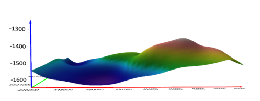
Basement rocks often consist of relatively older, denser, and different-density rocks compared to the overlying rock layers. These density variations create gravity anomalies that can be observed and analyzed using gravity methods. Basement modeling implementation can be utilized for geothermal exploration. In the Lainea , Southeast Sulawesi, there is geothermal potential. While some research has been conducted, no studies on basement modeling have been found. Therefore, to enrich the study, this research performs 3D basement modeling in the Lainea area based on gravity measurement data. The modeling is carried out using the Grav_D_Inv inversion program, utilizing residual gravity anomalies from complete Bouguer anomalies. The program runs on MATLAB with a graphical user interface (GUI) and relies on several parameters, including anomaly depth estimation, area size, wavenumber range for low-pass filters, density contrast, and windowing. The inverted basement in the Lainea geothermal area, integrated with geological and previous geophysical studies, can be interpreted as metamorphic rocks with intrusive igneous rocks in the central area. The Lainea geothermal basement relief tends to follow surface structural and topographic patterns, displaying intrusive structures at depths of 1200 - 1500 meters with a peak area in the southeast region of the research area.
References
Ainshad, K. (2022). Karakteristik Fluida Reservoir Panasbumi pada Manifestasi Mata Air Panas Lainea. Universitas Halu Oleo.
Hadi, M. N., Kusnadi, D., & Widodo, S. (2010). Penyelidikan Terpadu Geologi Dan Geokimia Daerah Panas Bumi Lainea, Kabupaten Konawe Selatan, Provinsi Sulawesi Tenggara.
Hamimu, L., Asfar, S., Arisona, Ngkoimani, L. O., Silvara, Irawati, & Rubaiyn, A. (2022). Quantitative Analysis of Relative Tectonic Activities of Geothermal Areas of Lainea, South Konawe District, Southeast Sulawesi Province, Indonesia. International Journal on Advanced Science, Engineering and Information Technology, 12(5), 1981–1988. https://doi.org/10.18517/ijaseit.12.5.13908
Hermawan, D., Sugianto, A., Yushantarti, A., Munandar, A., & Widodo, S. (2011). Kajian Panas Bumi Non Vulkanik Daerah Sulawesi Bagian Tenggara.
Jaya, L. O. M. G., & Suprayogi, A. (2014). Studi Potensi Geothermal di Kabupaten Konawe Selatan Berdasarkan Data Citra Satelit Landsat ETM+ Dalam Mendukung Ketahanan Energi di Sulawesi Tenggara.
Kasbani. (2009). Tipe Sistem Panas Bumi di Indonesia dan Estimasi Potensi Energinya. In Buletin Sumber Daya Geologi (Vol. 4). Pusat Sumber Daya Geologi.
Pham, L. T., Oksum, E., & Dolmaz, M. N. (2021). GRV_D_inv: A graphical user interface for 3D forward and inverse modeling of gravity data. Geofizicheskiy Zhurnal, 43(1), 181–193. https://doi.org/10.24028/gzh.0203-3100.v43i1.2021.225546
PSDG. (2010). Laporan Akhir Survei Geofisika Terpadu Gaya Berat, Geomagnet, dan Geolistrik Daerah Panas Bumi Lainea Kabupaten Konawe Selatan Provinsi Sulawesi Tenggara. Pusat Sumber Daya Geologi.
Purnomo, J., Koesuma, S., & Yunianto, M. (2013). Pemisahan Anomali Regional-Residual pada Metode Gravitasi Menggunakan Metode Moving Average, Polynomial dan Inversion. Indonesian Journal of Applied Physics, 3(1), 10.
Simandjuntak, T. O., Surono, & Sukido. (1993). Peta Geologi Lembar Kolaka (2 ed.). Badan Geologi.
Sompotan, A. F. (2012). Struktur Geologi Sulawesi. Perpustakaan Sain Kebumian Institut Teknologi Bandung.
Zarkasyi, A., & Widodo, S. (2014). Survei Magnetotelurik (MT) dan Time Domain Electromagnetic (TDEM) Daerah Panas Bumi Lainea, Provinsi Sulawesi Tenggara.
Downloads
Published
How to Cite
Issue
Section
License
Copyright (c) 2023 Jurnal Rekayasa Geofisika Indonesia

This work is licensed under a Creative Commons Attribution 4.0 International License.